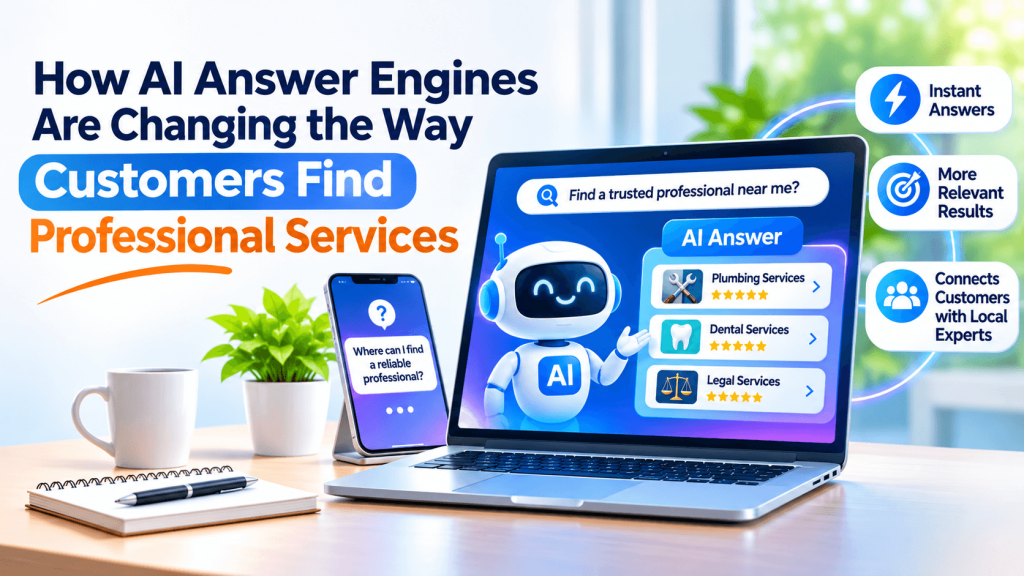
Instead of typing “estate attorney near me” and clicking through ten results, more people now ask a chatbot or voice assistant a full question: “Who handles wills and trusts in my county, and do they offer free consultations?” The response arrives as a short summary, sometimes naming a few firms.
For professional service providers, that shift raises a practical question: what shapes those summaries, and how can a firm make sure it is described correctly?
How AI-Powered Answers Gather Business Information
AI search tools and answer engines typically draw on information that is publicly available and widely consistent. That can include business websites, map profiles, reviews, news coverage, and directory listings. Each platform works differently, and most do not publish exactly which sources they rely on.
What is clear is that these systems summarize. If your information is vague, outdated, or contradictory across the web, the summary may be incomplete or simply leave you out.
What Makes a Firm Easier to Describe Accurately?
Clarity helps both people and machines. A firm that states plainly what it does, where it operates, and who it serves gives answer engines less to guess about.
- Write service pages that answer real client questions in plain language.
- Keep your name, address, phone number, and practice areas consistent everywhere.
- Add FAQs to your website using the questions clients actually ask during intake calls.
- Maintain accurate profiles on reputable directories relevant to your field.
None of these steps guarantees that a specific AI tool will mention your firm. They do make it more likely that, when your firm appears, the details are correct.
Why Consistent Listings Support AI Visibility
Picture a small family law practice that moved offices last year. Its website shows the new address, but three directories still list the old one. A summary tool pulling from those sources could repeat the wrong location, which costs the firm credibility before a client ever calls.
Reviewing where your firm appears online is a sensible fix. Browsing the Law Services category on Web Awards shows how legal providers present their details side by side, and it is a useful reminder to keep your own listing complete and current.
Conclusion
AI search is changing how clients begin their research, but the fundamentals still apply: accurate information, helpful content, and a consistent presence on trusted platforms. Start by auditing your listings and rewriting one service page around common client questions. A complete profile on Web Awards is one more place where your firm’s correct details can be found.
Frequently Asked Questions
Can I pay to be recommended by AI chatbots?
Most AI assistants do not offer a paid way to be named in their organic answers, and you should be skeptical of anyone promising guaranteed placement. Your best approach is improving the accuracy and clarity of information about your business across your website, profiles, and trusted directories.
Does AI search replace traditional local SEO?
No. It builds on many of the same foundations. Accurate business information, helpful content, genuine reviews, and a well-structured website remain important. Answer engines often rely on the same public information that traditional search uses, so strong local SEO habits still support visibility across both.
What is answer engine optimization in simple terms?
Answer engine optimization means presenting your information so it can be easily understood and summarized by tools that answer questions directly. In practice, that means clear headings, direct answers to common questions, consistent business details, and content written for real people rather than search tricks.
How can I check what AI tools say about my business?
Ask a few popular AI assistants simple questions about your business and services, such as your hours, location, or specialties. Note any errors, then trace them back to outdated sources like old directory listings or website pages. Correcting the original source is usually the most reliable fix.
Should law firms add FAQs to their websites?
FAQs can be very helpful when they answer real client questions clearly and accurately. Keep answers general and educational, avoid giving specific legal advice, and follow your state bar’s advertising rules. Well-written FAQs help visitors understand your services and can make your information easier to summarize.