An auto repair shop owner gets an email promising “500 listings in one week” for a low fee. It sounds efficient, but months later the shop finds its name on spammy sites, with misspellings and the wrong phone number. Cleaning it up takes longer than the original setup ever would have.
Choosing where to list a business is a decision worth making carefully, not in bulk.
What Separates a Useful Directory From a Weak One?
Quality online business directories exist to help people find businesses, not to collect links. They tend to have clear categories, real listings, working search features, and some form of review or moderation.
Weak directories often look abandoned, accept anything, or exist mainly to sell links. Listings there rarely send customers your way and may make your business look less credible by association.
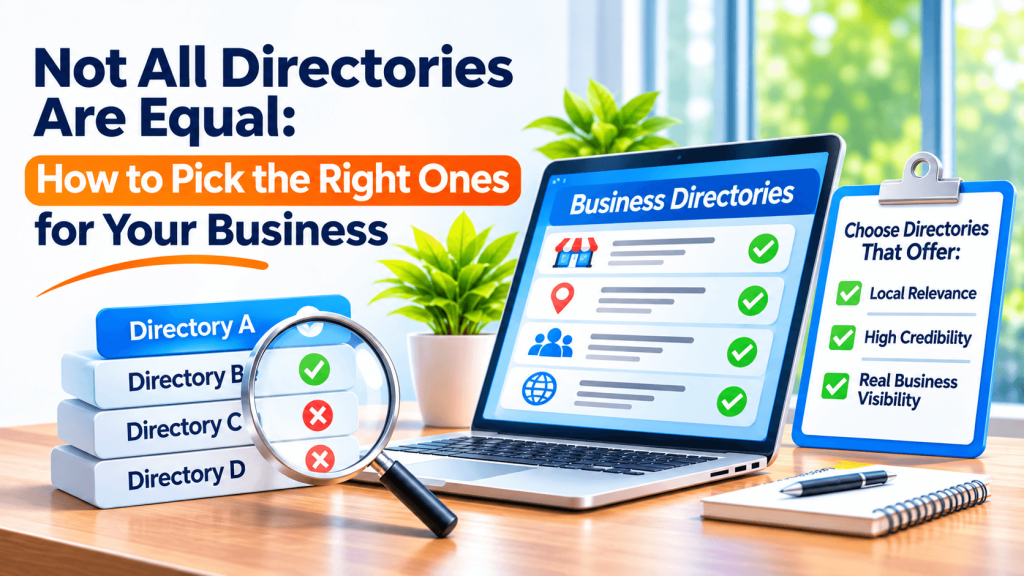
A Simple Checklist Before You Submit
Spend a few minutes evaluating each directory before adding your business.
- Relevance: Does it serve your industry, location, or customer type?
- Activity: Are listings recent, and does the site appear maintained?
- Organization: Can visitors easily browse by category and location?
- Control: Can you update or correct your information later?
- Transparency: Is there contact information and a clear purpose?
If a directory fails several of these checks, skip it. A focused set of well-chosen listings is easier to maintain and more useful to customers. It also limits the number of places where outdated details can linger after you move, rebrand, or change your hours, which saves time during future updates.
Realistic Benefits of a Good Listing
A quality listing can help customers verify your details, compare you with nearby options, and click through to your website. That referral traffic is often small but well-qualified, since visitors were already searching for your type of service. Listings also support citation consistency as part of a broader local SEO plan.
Consider how a driver looking for brake repair might browse an Automotive Services category to compare local shops. Being present there, with accurate details, puts your business in front of someone ready to act. Web Awards organizes listings this way so visitors can browse by service type.
Conclusion
Directory listings work best when they are selective, accurate, and maintained. Skip bulk submission deals, evaluate each site with a quick checklist, and keep a record of where you are listed. If Web Awards fits your industry and audience, adding a complete profile is a practical way to reach customers who are already browsing for local services.
Frequently Asked Questions
Do directory listings still matter for SEO?
Quality directory listings can support local SEO by reinforcing consistent business information and helping customers find you. Their value varies by directory, and no listing guarantees higher rankings. Think of them as one supporting piece of a broader strategy that also includes your website, reviews, and Google Business Profile.
Are paid directory listings worth it?
Some can be, depending on the directory’s audience and relevance to your business. Before paying, check whether the site is active, well organized, and visited by your type of customer. Ask what the fee includes, and avoid any service that promises guaranteed rankings, traffic, or a specific number of leads.
What information should a complete listing include?
Include your exact business name, address, phone number, website, hours, primary category, and a clear description of your services. Add photos and service areas when the directory allows it. The more complete and accurate your listing, the easier it is for customers to decide whether to contact you.
How do I track whether a directory sends me customers?
Check the referral section of your website analytics to see which sites send visitors. You can also add tracking parameters to the website link in each listing, ask new customers how they found you, and use a dedicated phone number for specific listings when practical.