
A homeowner with a burst pipe searches for help at 11 p.m., finds a plumbing company online, and dials the number listed. The line is disconnected because the company switched carriers two years ago and never updated its older profiles. That call goes to a competitor, and the business owner never even knows it happened.
Situations like this are more common than many owners expect, and they usually trace back to scattered, outdated business information across the web.
What Counts as a Business Citation?
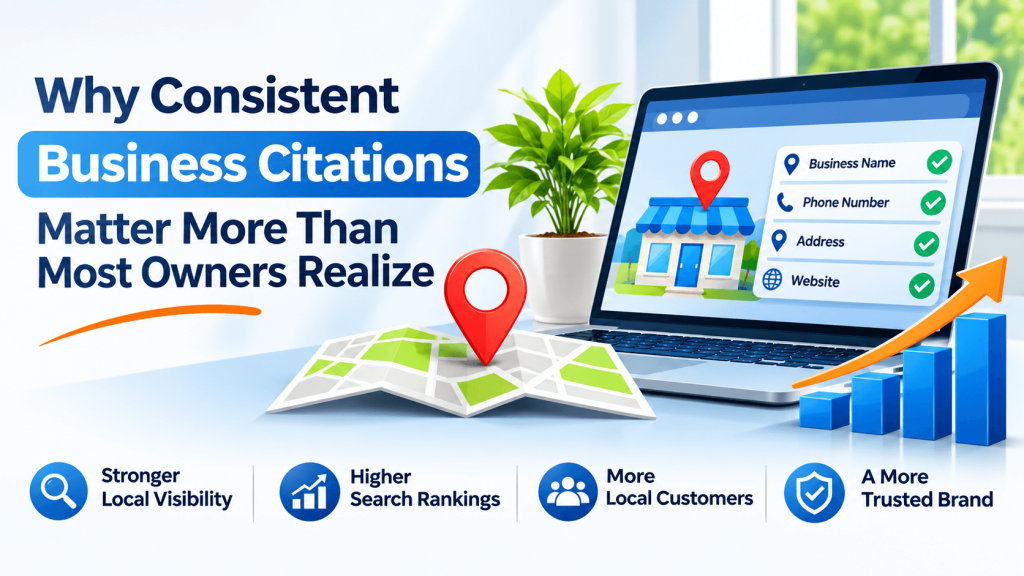
A citation is any online mention of your business name, address, and phone number, often shortened to NAP. Citations appear on directories, social profiles, review platforms, chamber of commerce pages, and industry associations. Some include a website link, while others simply list your details.
Search engines and customers both use these mentions to confirm that your business is real and currently operating. When the details match everywhere, the picture is clear. When they conflict, people hesitate.
How Do Inconsistent Details Hurt a Local Business?
Small differences add up. “Suite 200” on one site and “Ste. 200” on another is usually harmless, but an old address, a former business name, or a retired phone number creates real confusion. Customers may drive to the wrong location or assume you have closed.
Inconsistent business citations can also make it harder for search platforms to connect all your mentions to a single, trustworthy entity. Clean, matching information gives your broader local SEO efforts a steadier foundation, although no single factor guarantees how you will appear in results.
A Practical Way to Clean Up Your Listings
Start by deciding on one official version of your business name, address, and phone number, then use it everywhere. Next, search for your business name and old phone numbers to find outdated mentions.
- Update or claim profiles on major platforms first, including Google Business Profile.
- Correct industry and local directories where customers actually search.
- Keep a simple spreadsheet of every listing, login, and last-updated date.
- Review the list whenever you move, rebrand, or change phone systems.
Service trades benefit from this discipline in particular. A well-organized Plumbing and Plumbers category on a directory such as Web Awards shows how customers browse local providers side by side, which is exactly where accurate details make a difference.
Conclusion
Citation accuracy is not glamorous work, but it protects the calls, visits, and trust you have already earned. Set aside an hour each quarter to review your listings and fix anything that has drifted. If you are building out your presence, listing your business on Web Awards with your verified details is a sensible step toward keeping your information consistent where local customers look.
Frequently Asked Questions
How many business citations does a small company need?
There is no magic number. Focus on quality and relevance rather than volume. Start with the major platforms, then add trusted local and industry directories your customers actually use. A smaller set of accurate, well-maintained listings is far more useful than dozens of profiles you cannot keep updated.
Should I delete duplicate listings or just leave them?
Duplicates should be addressed. Two profiles for the same location can split reviews, confuse customers, and display conflicting details. Most platforms offer a way to report or merge duplicates. Claim the listing you want to keep, update it fully, and request removal or merging of the extra one.
Do abbreviations like St. versus Street really matter?
Minor formatting differences are generally understood by people and search platforms. Still, choosing one consistent format makes audits easier and reduces the chance of errors spreading. The bigger priority is making sure the core facts, such as your address, phone number, and business name, are correct everywhere.
How often should I audit my citations?
A quarterly review works well for most local businesses. You should also run an audit right away after any change, such as moving locations, adding a new phone line, updating your hours, or rebranding. Catching outdated information early prevents it from being copied to other sites.